
Pollutant interception
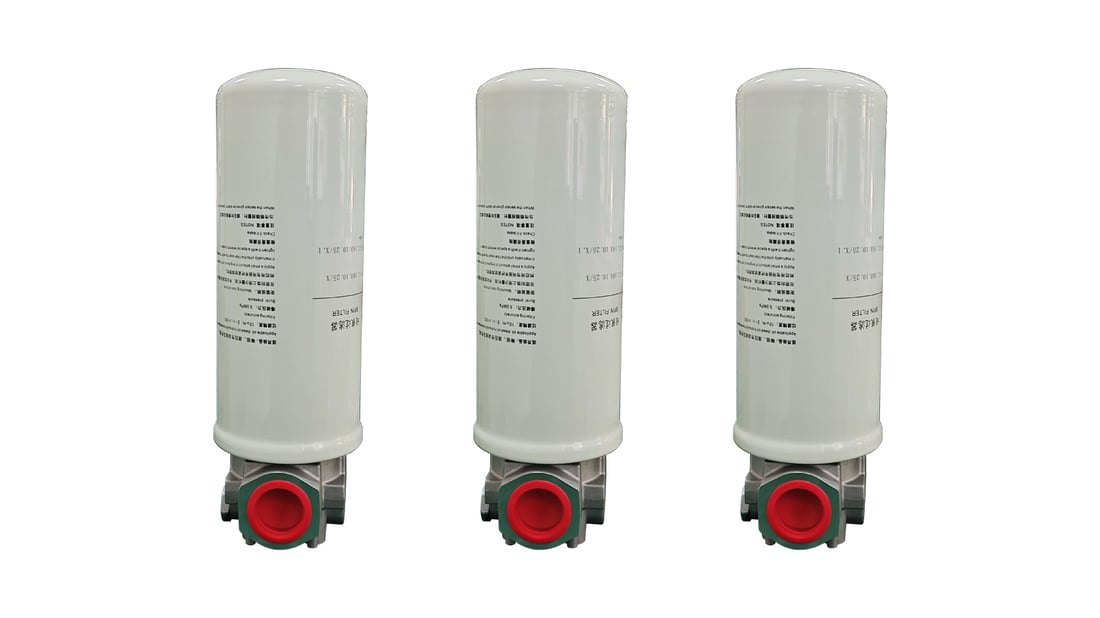
The filter intercepts particles, impurities, metal debris, and other pollutants in hydraulic oil through its filter structure (such as metal mesh, filter paper, etc.), preventing them from entering precision components such as hydraulic pumps and cylinders, and avoiding wear or jamming faults.
Oil cleanliness control
Regularly replacing or cleaning the filter element can maintain the cleanliness of the oil within the ISO 4406 standard range (such as ≤ 18/15/12), reducing the risk of seal aging and hydraulic valve failure caused by oil contamination.
Differential pressure monitoring and alarm
The differential pressure transmitter monitors the pressure difference before and after the filter element in real time. When the pressure difference exceeds the set threshold (such as 0.35MPa), an alarm is triggered to prompt timely replacement of the filter element to avoid abnormal system pressure or insufficient flow caused by blockage.
System pressure stability
Cleaning the oil can reduce the internal friction loss of the hydraulic pump, maintain the system working pressure within the design range (such as 10-35MPa), and prevent pressure fluctuations or hydraulic impacts caused by oil contamination.
Key component protection
Filters can prevent large particles and impurities from entering precision control components such as servo valves and proportional valves, avoiding valve core jamming or sealing failure, and ensuring accurate transmission of control signals.
Quote Inquiry Contact us!