Level gauge types are crucial instruments used across various industries to measure and monitor liquid and solid levels within tanks, vessels, and containers. They provide essential data that ensures operational safety, efficiency, and accurate process control. Understanding the different level gauge types enables industries to select the most suitable devices tailored to specific applications and environmental conditions.
Float Level Gauges: Simple and Effective Measurement
Float level gauges operate based on buoyancy principles, where a float rests on the liquid surface, moving vertically as the level changes. This movement drives a mechanical indicator or sends signals via a magnet to a remote display. Known for their simplicity and reliability, float level gauges are widely used in oil and water tanks but may not be ideal for highly viscous or corrosive liquids.
Magnetic Level Gauges: Safety and Visibility Combined
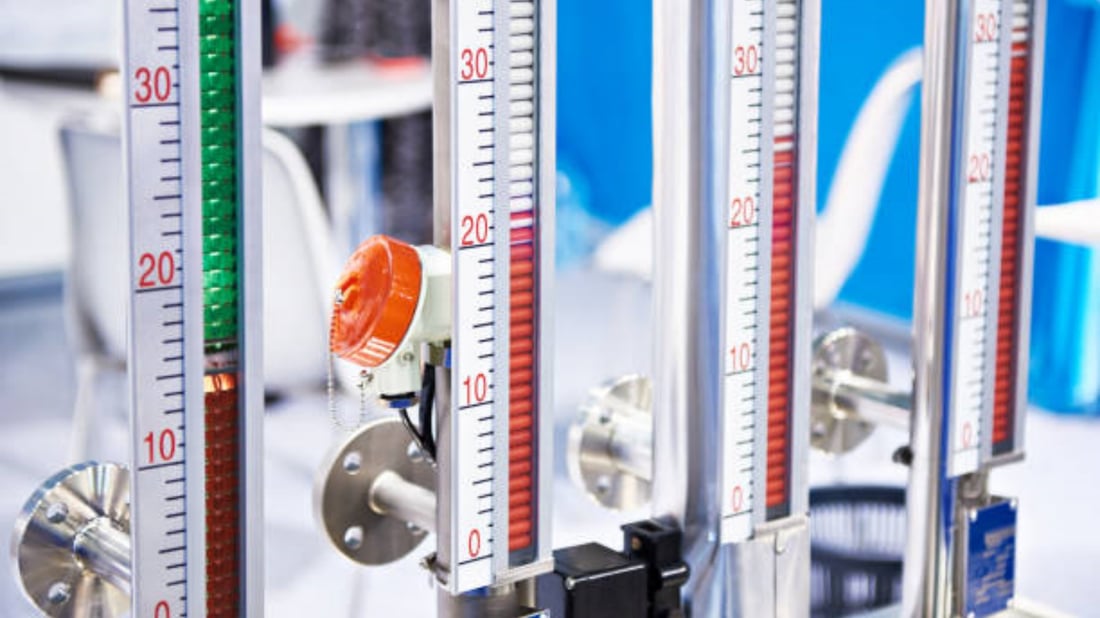
Magnetic level gauges consist of a chamber attached to the vessel, housing a float with an internal magnet. As the float moves, an external magnetic indicator connected to it clearly displays the liquid level. This design enhances safety by isolating the measuring chamber from process fluids, making it suitable for toxic or hazardous materials. Magnetic level gauge types offer accurate, maintenance-friendly solutions in demanding environments.
Ultrasonic Level Gauges: Non-contact Precision
Ultrasonic level gauge types employ sound waves to determine liquid or solid levels without any direct contact. These devices emit ultrasonic pulses towards the surface, measuring the time taken for echoes to return. This non-invasive technique is ideal for applications involving abrasive, corrosive, or sticky substances, reducing wear and maintenance costs while providing continuous, accurate measurements.
Radar Level Gauges: Advanced Technological Accuracy
Radar level gauges use microwave radar signals to measure levels, reflecting off the surface to determine distance. This method offers high accuracy and stability under challenging conditions such as high temperature, pressure, or vapor presence. Radar level gauge types are preferred in petrochemical, food processing, and water treatment industries due to their robustness and reliability in detecting liquid and solid materials.
Capacitive Level Gauges: Electrical Property-Based Detection
Capacitive level gauge types rely on changes in capacitance between electrodes when liquid levels vary. These gauges are highly responsive and suited for bulk solids and liquids with varying dielectric constants. Their electronic nature allows for integration with automated systems and real-time monitoring, making them versatile solutions in diverse industrial environments.
Pneumatic Level Gauges: Utilizing Air Pressure Principles
Pneumatic level gauges measure liquid levels based on air pressure changes in a dip tube submerged within the fluid. As fluid levels rise or fall, the pressure needed to blow air through the tube varies accordingly. These reliable, explosion-proof devices perform well in hazardous areas, especially where electrical devices pose risks, and are common in chemical and oil industries.
Displacer Level Gauges: Weight-Based Level Detection
Displacer level gauge types function on the Archimedes principle, where a weighted displacer immersed in the fluid is restrained by a spring or sensor. Fluctuations in buoyant force caused by liquid level changes are converted to readable signals. These gauges are ideal for viscous liquids and sludge monitoring due to their durability and precision in challenging process conditions.
Optical Level Gauges: Quick and Direct Visual Indication
Optical level gauges use changes in light refraction or reflection to indicate fluid presence within a specific point in a tank or pipe. Typically, these devices provide binary level detection (high/low) and are compact, reliable, and maintenance-free. Optical gauge types are commonly used for detecting liquid interfaces, leak points, or as safety backups alongside continuous level measurement devices.
Choosing the Right Level Gauge Type for Your Application
Selecting the appropriate level gauge type depends on several factors including fluid properties, environmental conditions, measurement accuracy needs, and safety requirements. Understanding the strengths and limitations of each level gauge type ensures optimal performance, extended equipment life, and cost efficiency. Investing time in evaluating operational parameters can prevent costly downtime and maintenance challenges.
Future Trends in Level Gauge Types
Emerging technologies are driving the evolution of level gauge types towards greater integration with digital and IoT platforms. Smart level gauges now offer wireless communication, predictive maintenance alerts, and enhanced data analytics. These advancements improve process automation, real-time monitoring, and remote control, fostering safer and more intelligent industrial environments. Embracing these innovations will shape the future landscape of level measurement solutions.
Quote Inquiry
contact us