

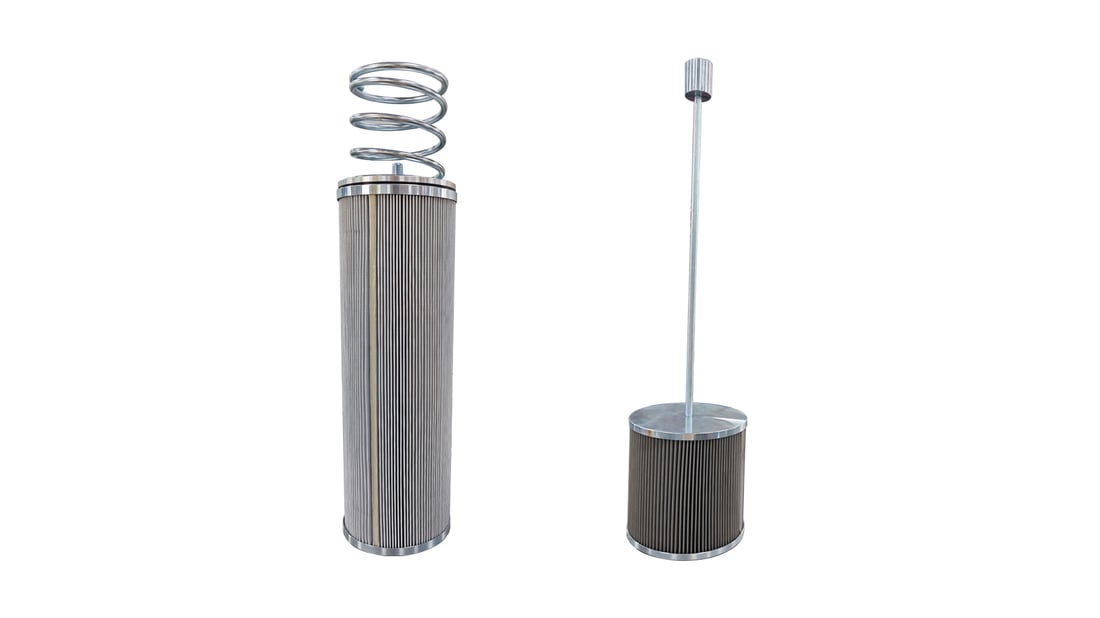
1. Functional Positioning
Oil suction filter: Installed at the suction port of the hydraulic pump, it primarily intercepts large residual impurities in the oil tank and contaminants entering through the air, protecting the oil pump and other hydraulic components from wear. Due to direct contact with the pump's suction inlet, it must ensure high flow capacity to prevent excessive pressure loss and cavitation.
Return oil filter: Located in the system's return oil pipeline, it filters out tiny contaminants such as metal particles and wear debris from hydraulic components during operation. This prevents impurities from flowing back into the oil tank and causing secondary contamination, thereby maintaining system cleanliness and extending equipment lifespan.
II. Installation Location
Suction oil filter: Typically immersed below the oil tank liquid level, the suction oil housing extends into the oil tank below the liquid surface, while the suction oil filter head protrudes outside the tank.
Return oil filter: Located at the end of the system return oil line, near the oil tank inlet.
3. Structural Design
Oil suction filter: Utilizes coarse filtration materials (such as stainless steel braided mesh or copper mesh) to increase oil passage area and reduce resistance; equipped with a self-sealing valve, bypass valve, and contamination clogging alarm to prevent oil leakage during replacement. For example, the WU-type oil suction filter falls into this category.
Return oil filter: Mostly adopts a folded or composite structure (e.g., glass fiber filter paper + metal skeleton) to enhance dirt-holding capacity and filtration efficiency. An internal bypass valve automatically opens when clogged to ensure system operation, and some models integrate a signal transmitter for replacement alerts.
IV. Material Properties
Oil suction filter element: Preferably made of corrosion-resistant, washable metal mesh (such as 304 stainless steel).
Return oil filter: In addition to stainless steel, synthetic fiber filter media may be used to enhance the capture of fine particles.
V. Maintenance Cycle
Oil suction filter: Due to its coarse filtration and reusability after cleaning, it requires less frequent maintenance but needs regular inspection to ensure it does not clog and affect pump suction efficiency.
• Return oil filter element: Although highly durable, due to continuous exposure to contaminants, it is recommended to replace it promptly based on working conditions to prevent frequent activation of the bypass valve and potential system failure.
In summary, the oil suction filter focuses on front-end protection and flow assurance, while the oil return filter emphasizes back-end contamination control and precision improvement. Together, they form a comprehensive clean barrier for the hydraulic system. Selection should consider factors such as medium type, temperature range, and pressure fluctuations
Quote Inquiry
contact us